
Reduced Cable Routing
Avoid long video cable routes through moving forklift structures.

Wireless Forklift Visibility System
2.4G wireless AHD camera system designed for forklift rear visibility, reversing assistance and warehouse material-handling applications.
Digital wireless video transmission
Wide voltage system input
Supports multiple wireless camera configurations
Flexible retrofit installation
OEM / ODM · Sample Evaluation · Configuration Support
Traditional wired camera systems may require long cable routing through or around moving forklift structures. For retrofit projects, moving masts or inconvenient cable routes, a wireless camera system can simplify installation.
A wireless forklift camera system connects a wireless camera with a receiving display to provide additional rear visibility and blind-spot monitoring for forklift operations.
Avoid long video cable routes through moving forklift structures.
Magnetic battery-powered mounting supports position testing on suitable metal surfaces.
Useful when distributors, integrators and fleet operators test camera positions before rollout.
Explore Forklift Camera Solutions for vehicle-level planning. Review compatible camera and monitor kits, or compare wired vs wireless forklift camera systems before selecting an installation approach.
Camera position should be selected according to the visibility problem that needs to be solved.
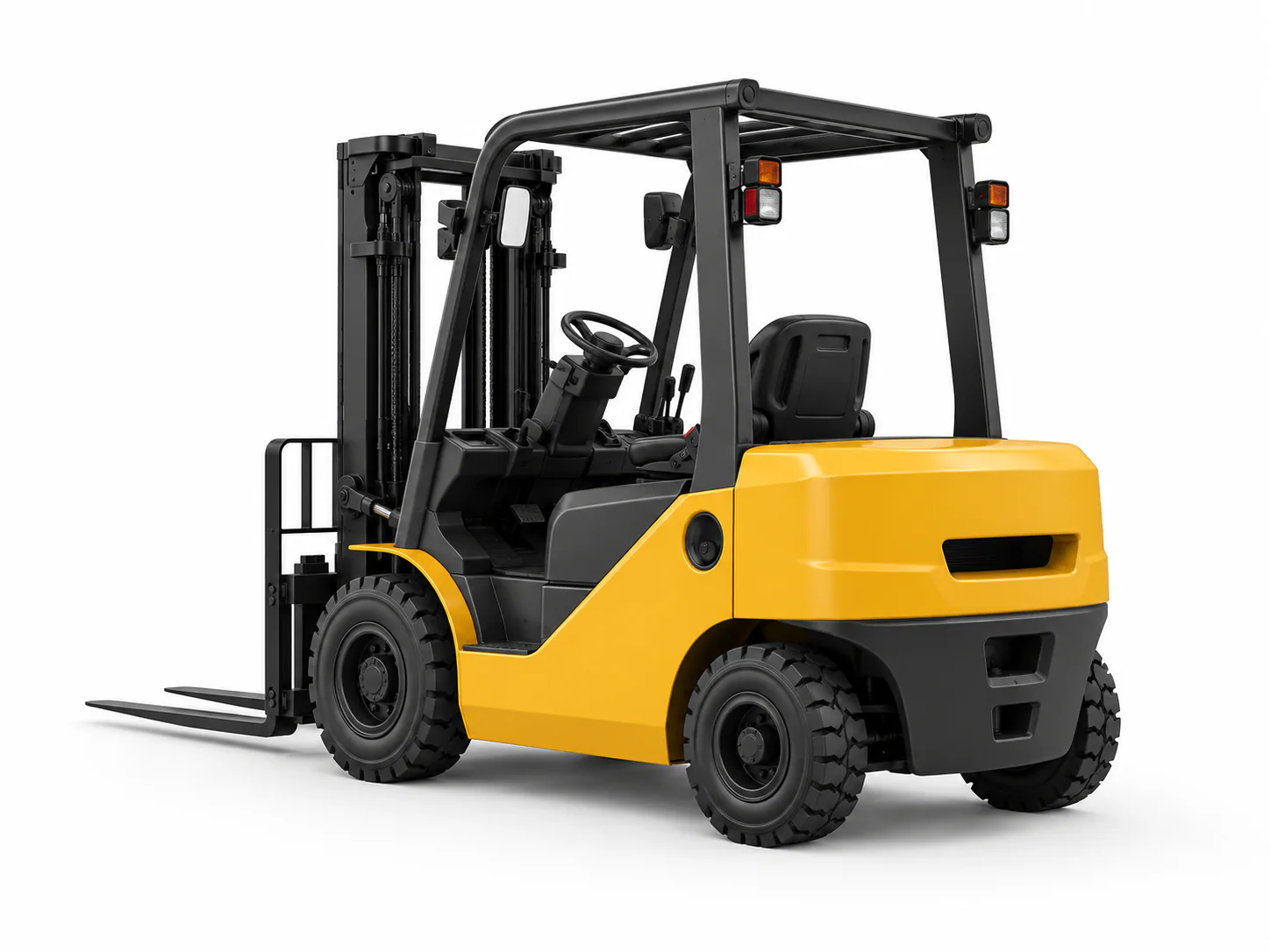
Rear visibility and reversing assistance.
Additional view of pallet entry or load position, depending on installation.
Supplementary view for a defined blind area around the forklift.
Position guide only. Confirm secure mounting, field of view and movement clearance on the target forklift.
Four confirmed system features for forklift visibility and retrofit planning.
Digital video transmission between camera and receiving monitor.
Supports flexible placement on suitable metal surfaces.
Allows camera placement without a long video cable.
Supports one or two wireless transmitter signals, depending on configuration.
Product views of the wireless camera system components.

Technical data for system selection, sample review and project confirmation.
| Product Type | Wireless forklift camera system |
|---|---|
| Video Transmission | 2.4G wireless AHD digital transmission |
| System Input | DC 12–35V |
| Camera Signal Support | Up to two wireless camera signals |
| Display Configuration | Single-channel or two-way split screen |
| Pairing | Automatic code matching |
| Image Orientation | Mirror or normal image setting for two channels |
| Reference Lines | Adjustable electronic distance reference lines |
| Camera Power | Mobile battery |
| Mounting | Magnetic installation |
| Environmental Protection | Waterproof; rating not specified |
Camera position and the required view should be confirmed on the target forklift before fleet rollout.

Add a rear or selected blind-spot view between racks, loading areas and narrow aisles.
A rear-mounted camera provides an additional visual reference around pallets, racks and warehouse traffic.
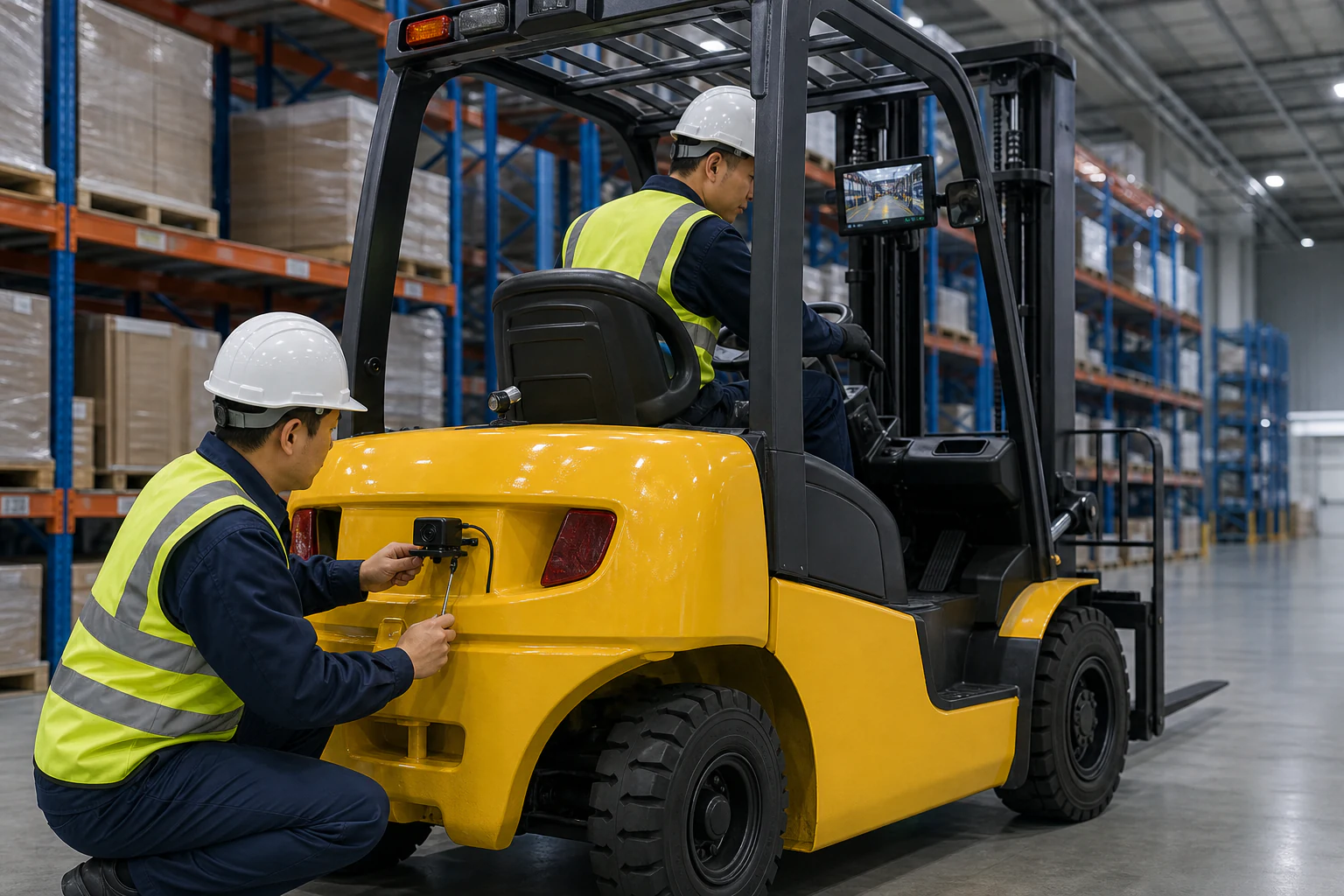
Select the camera position for the required view during pallet handling and loading tasks.
Application illustration; final position requires vehicle-specific review.Evaluate visibility on existing forklifts without extensive video cable routing.
The source record specifies a mobile battery and magnetic installation. Select a clean, suitable mounting surface, secure the camera position, confirm the required image orientation and reference lines, and test the complete forklift movement envelope before operation. Magnetic mounting does not remove the need for a secure installation review.
Request Product DetailsChoose the transmission approach around the vehicle structure and installation plan.
Best suited for:
Best suited for:
Need help choosing? Read wired vs wireless forklift camera systems.

Configuration decisions depend on the buyer's fleet, application and project volume.
Add a wireless visibility option to forklift equipment projects.
Evaluate rear or selected blind-spot visibility for existing fleets.
Integrate camera and monitor configurations into industrial vehicle projects.
Discuss camera, monitor, mounting and branding options for volume projects.
Practical answers for forklift camera selection, installation review and project configuration.
The camera sends AHD video over a 2.4G wireless digital link to a receiving monitor. Camera position, power and signal performance should be checked on the target forklift.
Possible positions include the rear counterweight, mast or fork carriage, or another selected blind-spot position. Choose and test the mounting point according to the required view and the forklift structure.
Yes. A wireless forklift camera can be configured as an additional forklift reversing camera when its mounting position and viewing angle provide the required rear view. The complete operating route, signal performance, camera security and image coverage should be tested on the target forklift before routine use or fleet rollout.
The confirmed product record supports up to two wireless camera signals. A single-channel or selected two-way split-screen configuration may be reviewed for the project. The required views, display mode, camera positions and wireless performance should be confirmed on the actual forklift before the final configuration is approved.
Wireless describes the video transmission between the camera and receiving display. The camera can use mobile battery power, so a battery powered forklift camera may avoid a long moving video cable. The display and complete system still require correct power, secure mounting and application-specific testing before operation.
It can support reversing, rear visibility or a defined blind-spot view in a warehouse. Confirm the position and performance for the forklift model, operating environment and required view.
Yes. For a forklift wireless camera system project, SuperPower can review the camera and display configuration, connectors, branding and other production requirements. Available options depend on the selected components, project quantity and application. Share the target forklift, required view and destination market so feasibility can be confirmed before quotation.
Tell us your forklift type, required viewing position, quantity and installation environment. We can recommend a suitable camera, monitor and mounting configuration.