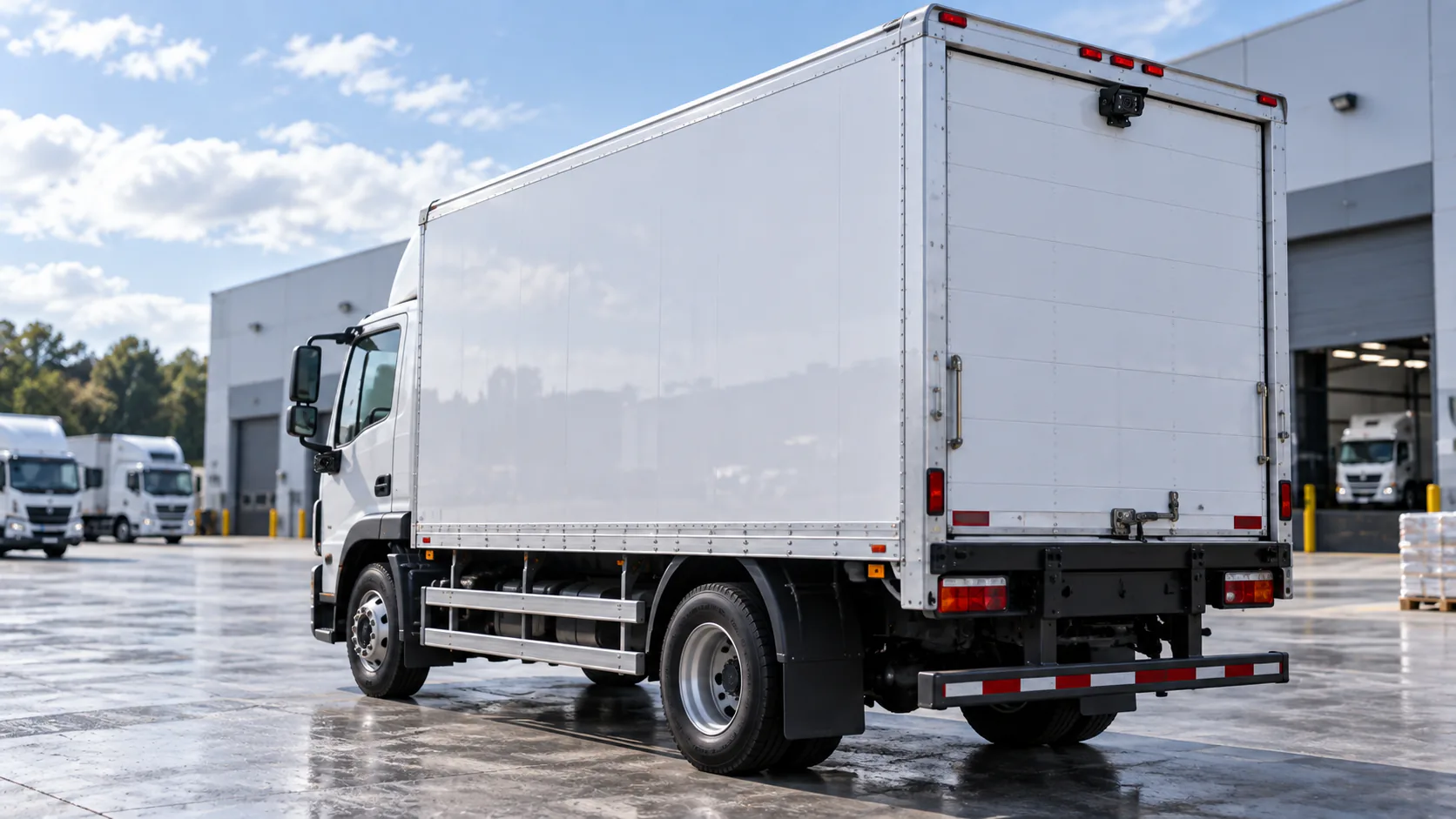
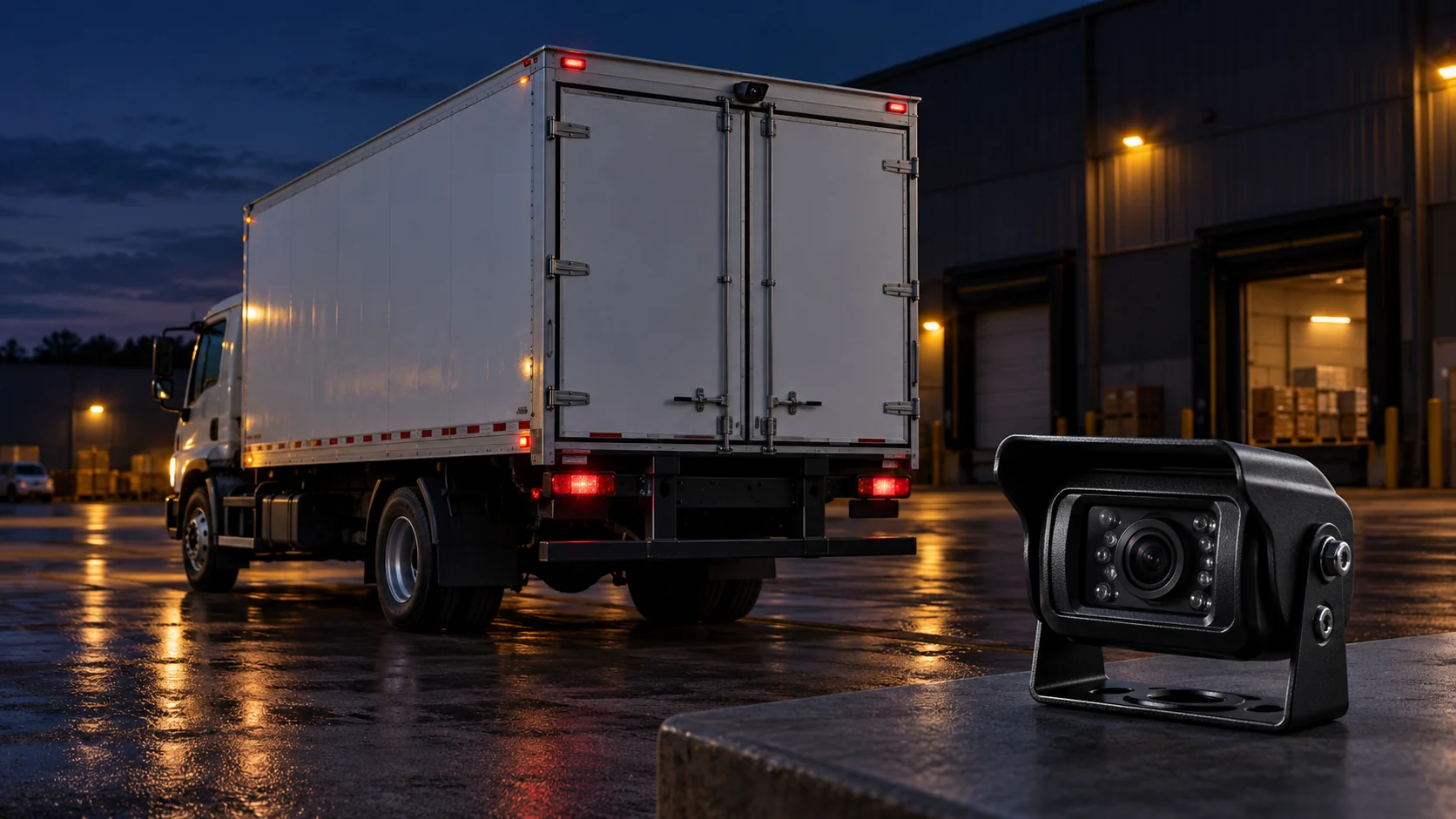
A night-vision specification is a starting point for a vehicle camera project. The purchasing decision still needs a clear answer to a practical question: can the driver see the required area on the installed monitor under the lighting conditions of the job?
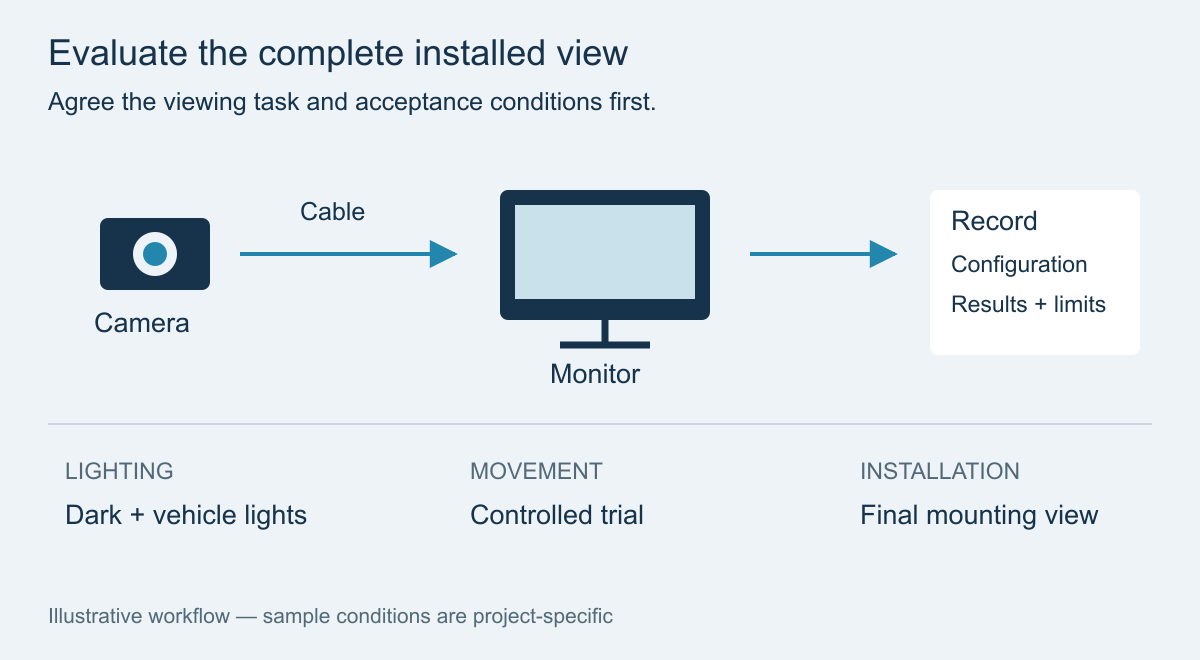
For a truck reversing at a depot, a bus entering a dark parking area or equipment operating near bright work lights, the evaluation should cover the complete installation. Define the viewing task before comparing camera features.
Quick Answer
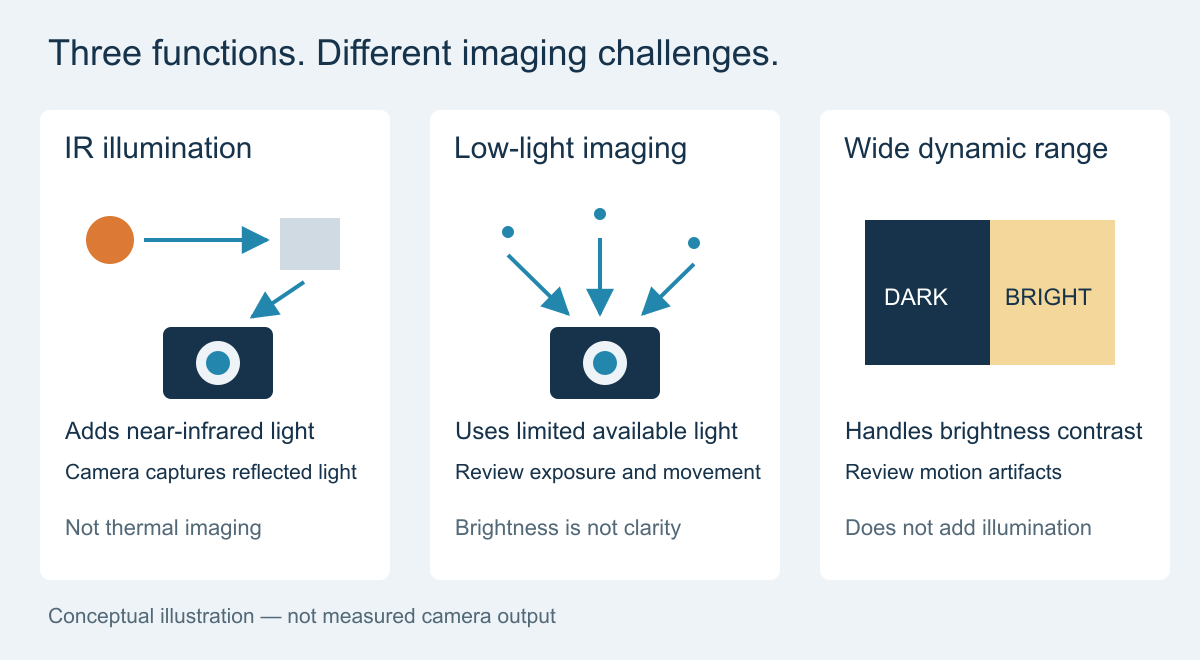
IR illumination adds near-infrared light; low-light imaging makes use of limited available light; WDR addresses large differences between bright and dark areas. These functions can work together. None, by itself, establishes the usable viewing distance or performance of a particular vehicle camera.
Key Takeaways
- Request the exact night-mode configuration offered for the quoted model.
- Evaluate movement as well as stationary objects.
- Include vehicle lights and nearby reflective surfaces in the trial.
- Compare samples on the intended monitor and wiring assembly.
- Agree acceptance conditions before approving a production order.
IR, Low-Light Imaging and WDR Compared
| Function | Main role | Question for the supplier |
|---|---|---|
| IR illumination | Provides near-infrared light for a compatible camera | Is illumination included, and what scene was used to assess its coverage? |
| Low-light imaging | Produces an image from limited available light | Under what exposure, illumination and operating mode was performance assessed? |
| Wide dynamic range (WDR) | Handles bright and dark regions within one scene | Which WDR implementation is supplied, and can we evaluate it with movement? |
Treat these as separate specification questions rather than three grades on a single performance scale.
What IR Night Vision Does
An IR-sensitive camera can form an image using reflected near-infrared illumination. This is different from thermal imaging, which detects heat radiation. IR night-mode images are commonly monochrome. A day/night label does not necessarily mean an illuminator is built in.
Illumination coverage must suit the viewing area. Nearby reflective surfaces and contamination around the optical path can interfere with the image. These principles are described in Axis's IR imaging white paper; its proprietary features should not be assumed to exist in other manufacturers' cameras.
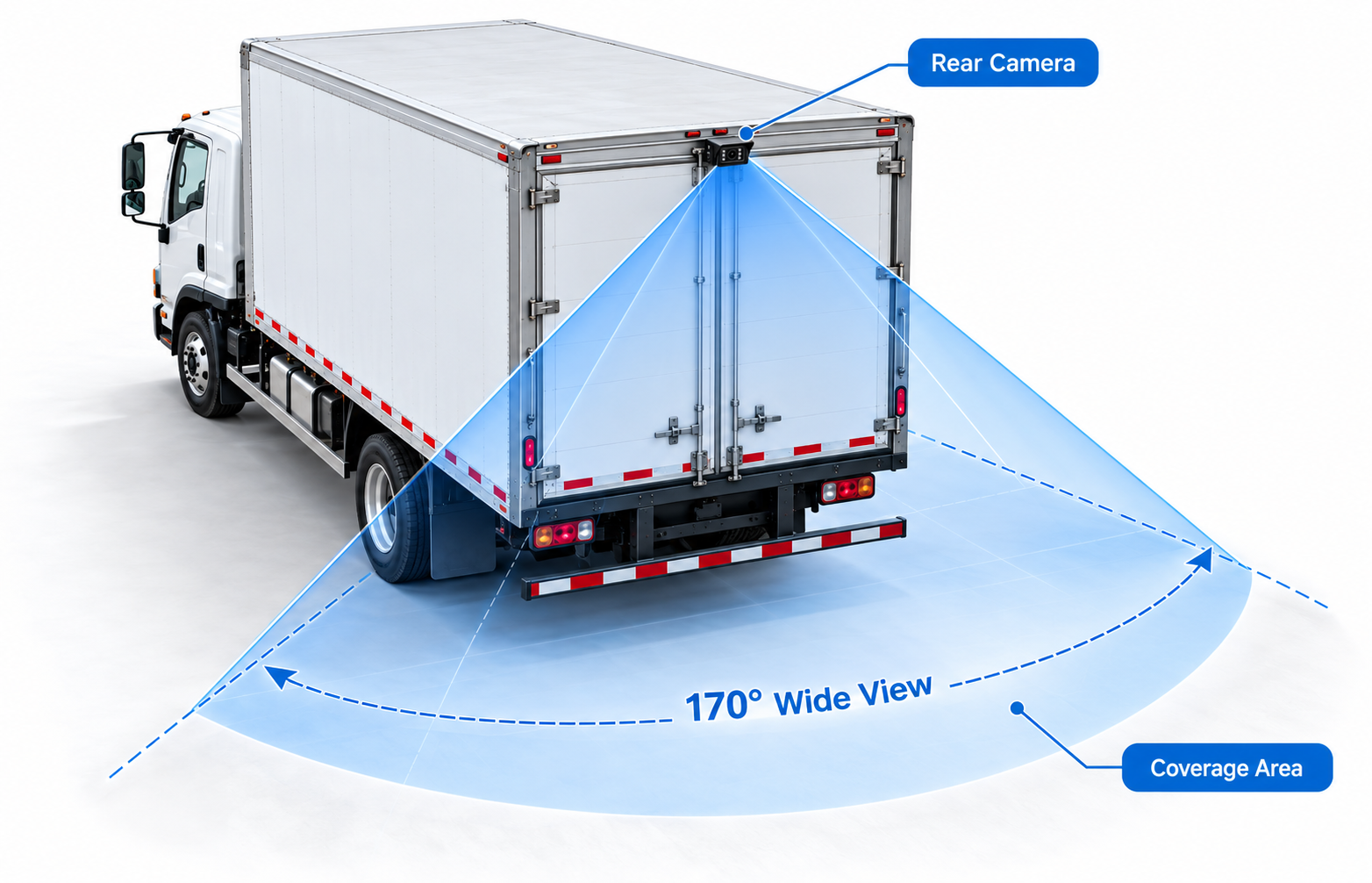
For a vehicle project, ask the supplier to identify the exact camera variant, its illumination arrangement and the proposed mounting position. Include a photograph showing nearby body panels, brackets and lamps in the project brief.
Why a Bright Night Image Can Still Be Difficult to Use
A longer exposure gathers more light but can blur moving objects. Increasing gain can brighten the image while also increasing visible noise. A sharp stationary demonstration therefore does not establish performance during movement. See the exposure and gain explanations in the Axis image-quality guide.
For sample approval, request video rather than relying exclusively on still screenshots. Specify the task to be judged: viewing the rear approach area, following a reference object's position or distinguishing an edge at an agreed distance. Do not substitute an attractive overall image for that task.
What WDR Can and Cannot Establish
WDR concerns scenes with substantial brightness differences, such as a dark entrance beside a brightly lit yard. Depending on the implementation, WDR processing can introduce artifacts, including ghosting around movement. A WDR label alone is therefore insufficient evidence of usable night-time video. The Axis WDR white paper explains the different approaches and their tradeoffs.
Ask for the actual configuration supplied with the sample. If settings are adjustable, record them; if they are fixed, have the supplier identify the factory configuration. Approve the configuration you intend to purchase.
How to Read Night-Vision Specifications Before Ordering
Use the quotation review to resolve incomplete claims:
| Specification or claim | Evidence to request |
|---|---|
| “Night vision” | Operating mode, illumination provision and representative footage |
| Minimum illumination | Test conditions, exposure, lens information and whether IR was active |
| IR range | Target, mounting geometry, lighting conditions and criterion used to judge visibility |
| WDR value or feature | Implementation and footage containing both brightness contrast and movement |
| HD resolution | Exact output format and the intended receiver/display configuration |
Keep unanswered entries open in the sample review. Avoid turning an unspecified night-vision claim into a guaranteed distance or identification capability.
A Practical Night-Time Sample Evaluation Checklist
The following is a proposed procurement workflow, not a certification test or a report of measured SuperPower performance.
1. Define the installation and viewing task
Record the vehicle type, camera height and angle, required coverage, reference-object distances, monitor location and normal working conditions. Use the same agreed setup when comparing candidates.
For broader system planning, see the backup-camera selection guide for trucks.
2. Prepare a controlled trial
Use a restricted test area and non-person reference targets. Keep people outside the vehicle path and follow the site's operating procedures. Begin with a stationary vehicle; any moving-vehicle assessment should be managed by qualified personnel under an agreed test plan.
3. Check the relevant lighting scenarios
| Trial condition | Record for review |
|---|---|
| Normal depot lighting | Whether the agreed viewing task is achievable |
| Darkest expected operating area | Visible target detail, not just overall brightness |
| Reverse or work lights active | Changes in the required viewing area |
| Bright light near a dark region | Visibility on both sides of the brightness transition |
| Controlled movement | Whether the agreed target remains interpretable |
| Final mounting position | Any obstruction or image issue absent from the bench trial |
Repeat the agreed scenarios with the proposed camera, cable and monitor combination. Include the DVR only if recording is part of the project; do not infer recording support from a camera specification.
4. Keep a repeatable acceptance record
Save the model and variant, configuration, mounting photographs, lighting description, cable length, monitor model and original video where capture is supported. Note any limitations of the recording method. For each scenario, record pass, fail or further review against the agreed viewing task.
If a sample fails, document the condition before changing the mounting or configuration. Repeat the affected trials after adjustment and identify the final approved assembly in the purchase specification.
Frequently asked questions
Does night vision mean the camera includes IR LEDs?
Do not assume that from the label. Request explicit confirmation of the illumination hardware and night-mode configuration for the quoted variant.
Is an advertised IR distance a guaranteed usable viewing distance?
Treat it as a specification requiring context. Ask how it was assessed and verify the viewing task at the distances required by your installation.
Should we choose WDR instead of IR?
They address different imaging conditions. Describe the lighting and viewing task to the supplier, then evaluate the proposed combination on a sample.
Is a night-time screenshot enough to approve a camera?
Include video and the agreed movement scenarios in the approval record. Also verify the final installed view on the intended monitor.
Which information should we send with an inquiry?
Provide the vehicle, mounting location, required viewing area, working-light conditions, camera-to-monitor cable length and existing receiver details. Add the intended target market and sample quantity for procurement planning.
Plan a Sample Review for Your Vehicle Project
Review available vehicle cameras and camera monitor kits, then share your project requirements. Confirm the selected model's documented features and agree a representative sample evaluation before finalizing the specification.
Technical References
- Axis: IR in surveillance — general IR imaging and illumination principles.
- Axis: Troubleshooting guide for image quality — exposure, gain and image artifacts.
- Axis: Wide dynamic range — WDR methods and limitations.
These references explain general imaging principles. They do not certify a SuperPower model, establish its performance or imply an affiliation with Axis.