
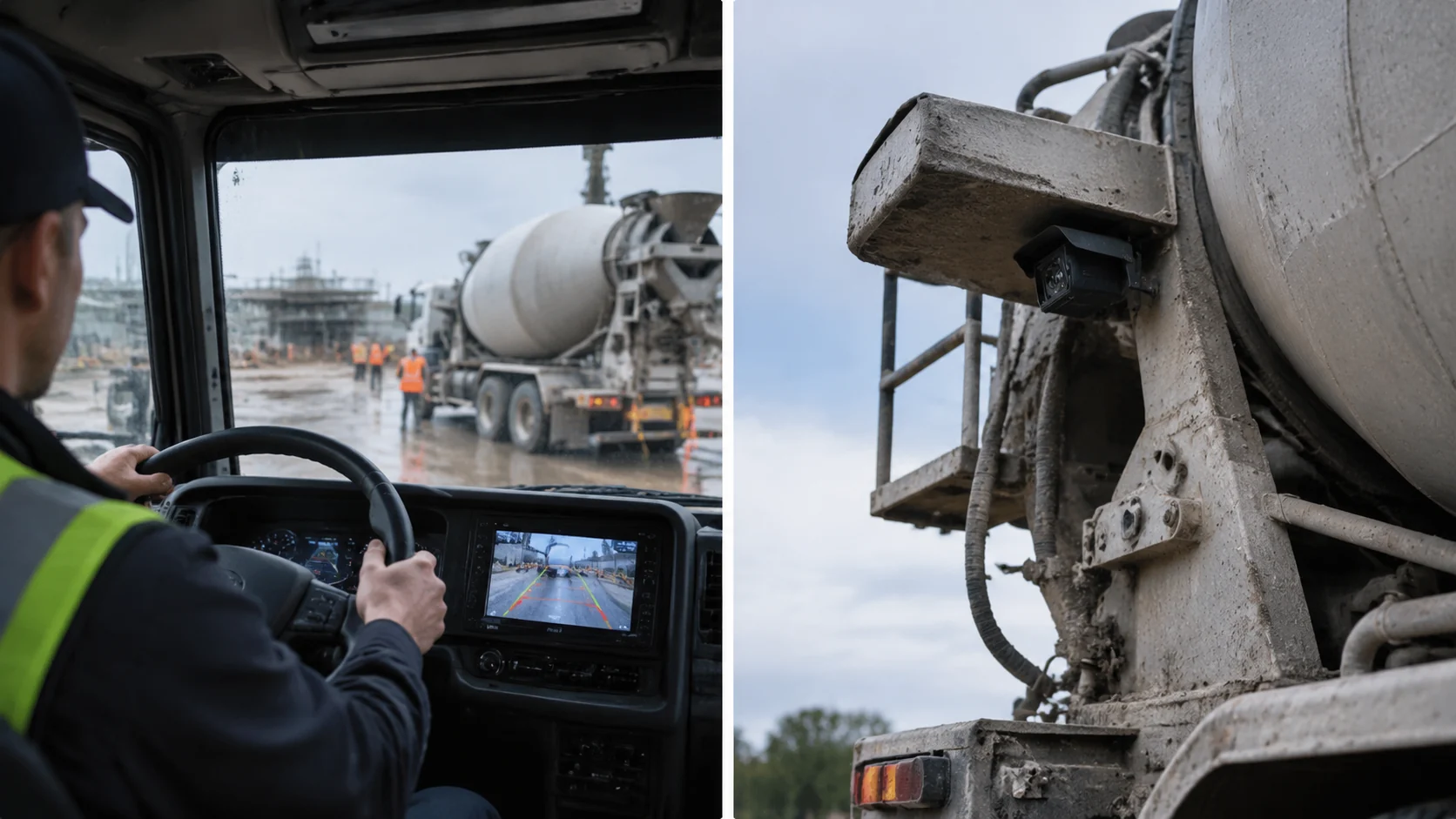
Operating a ready mix concrete truck involves managing a large vehicle through changing road and jobsite conditions. The rotating drum, water tanks, supporting frame and rear discharge assembly all influence what the driver can see. A well-planned concrete mixer truck camera system brings additional views of the areas involved in reversing, turning and material delivery.
On this page
Key Takeaways
- Frame the backing path behind the mixer truck.
- Aim side cameras at the clearances the driver needs to judge during turns.
- Use a discharge-area view when the operator needs to see the chute or receiving hopper.
Where Ready Mix Truck Cameras Add Useful Views
The mixing drum occupies much of the space behind the cab, while the discharge chute, hopper and supporting frame shape the view at the rear. Along the sides, wheel arches, steps and auxiliary equipment can obscure areas close to the vehicle.
These viewing conditions vary with chassis length, drum size and equipment layout. Planning cameras around the truck's daily tasks helps identify which rear, side or working-area views will be most useful to the operator.
Reversing into Position at the Jobsite
Approaching a pour site often involves backing into an active work area with temporary access routes, equipment and changing ground conditions. A rear-facing camera provides an additional view of the area behind the truck, helping the driver observe personnel, forms, site equipment and the approach to the unloading position.
The useful view should include the intended backing path rather than concentrating only on the truck's rear hardware. A picture dominated by the chute assembly may leave too little space on screen for the area farther behind the vehicle. Selecting the camera viewing angle together with the mounting position helps frame the required area.
Turning and Passing Through Narrow Areas
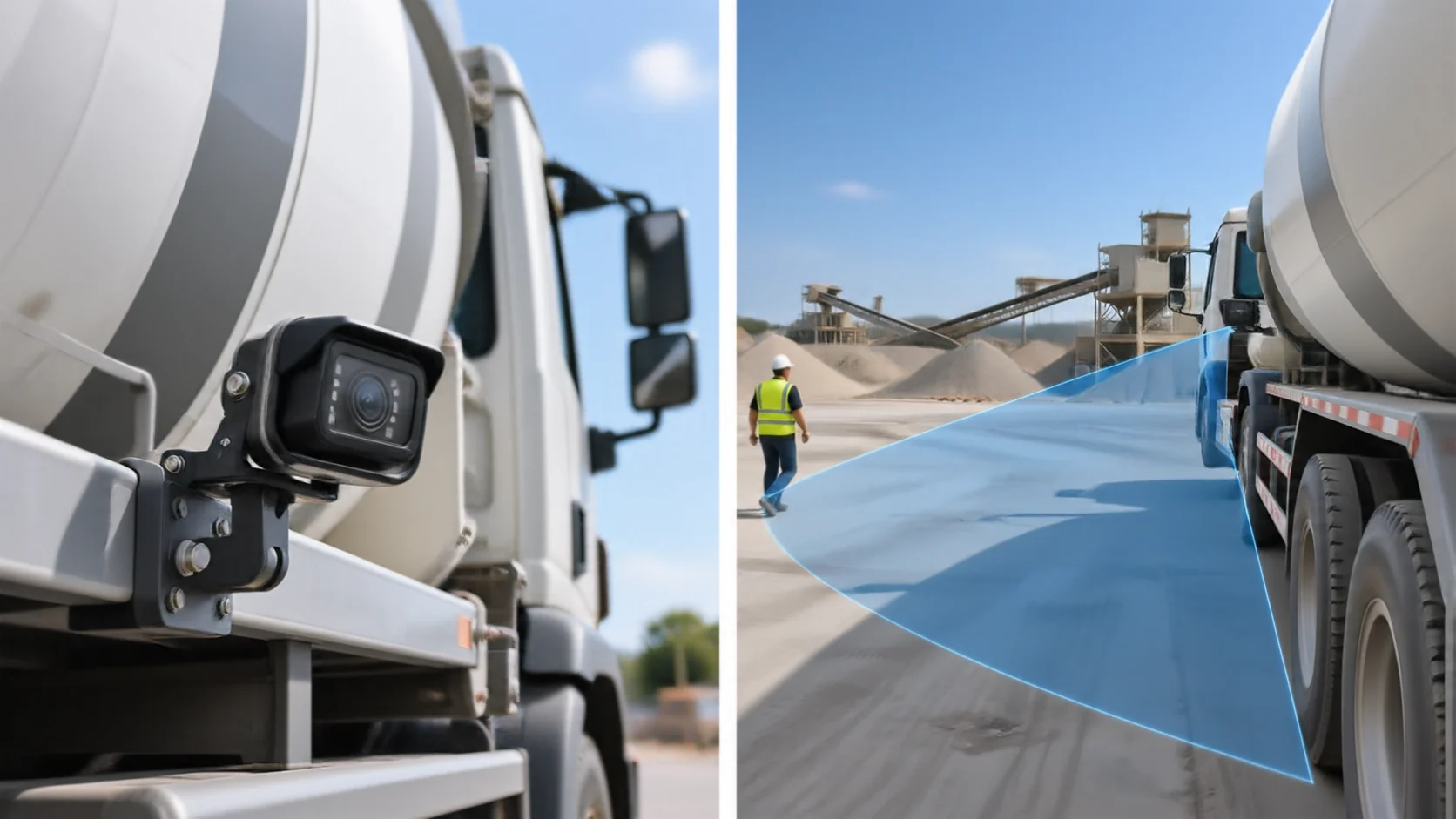
Concrete delivery frequently involves tight entrances, temporary access roads, parked vehicles and narrow staging areas. During turns, the driver needs to judge clearance along the sides as well as the direction of travel.
Side-mounted cameras can provide targeted views of curb lines, adjacent machinery and nearby structures. Positioning each camera around the required clearance area makes the view more relevant to the maneuver. On a mixer truck, this means considering the cab, steps, fenders and other equipment when deciding where the camera should look.
Observing the Discharge Area
Once the truck is positioned, attention shifts to material delivery. A camera directed toward the discharge area can provide a view of the chute, a concrete pump's receiving hopper or another intended pouring target.
Reversing and discharge monitoring call for different views. The reversing image needs to show the approach behind the vehicle, while the discharge image focuses on the chute and receiving area. Defining these tasks separately helps determine whether one camera position can serve both or whether a dedicated discharge view would be more useful.
The display location also matters. The person managing discharge should be able to see the relevant image from their normal operating position.
Presenting the Right View to the Operator
The cameras and in-cab monitor should work together around the operator's routine. Three practical considerations guide the configuration:
- Required views: Identify whether the priority is backing, side clearance, discharge observation or a combination of these tasks.
- Display position and access: Place the screen where the operator can read it comfortably while keeping the windshield and instruments clear. Choose a practical way to access the relevant camera view.
- Equipment and installation: Match camera outputs, monitor inputs and cabling, then select mounting and connection arrangements suited to vibration, dust, moisture and the truck's cleaning routine.
Starting with these working scenarios gives the configuration a clear purpose. Share the truck layout, operating conditions and areas that need observation to discuss a suitable camera and display arrangement.