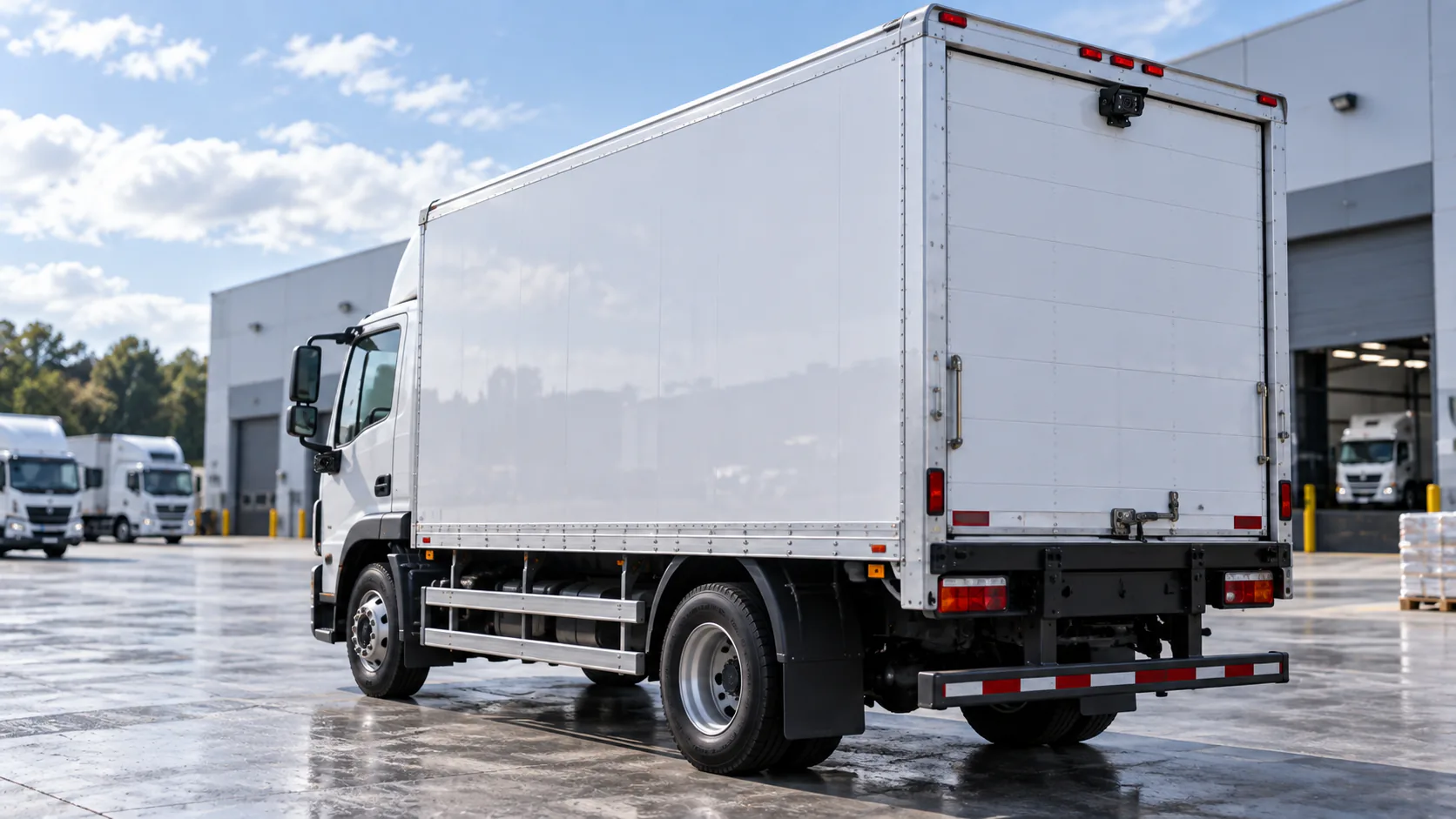
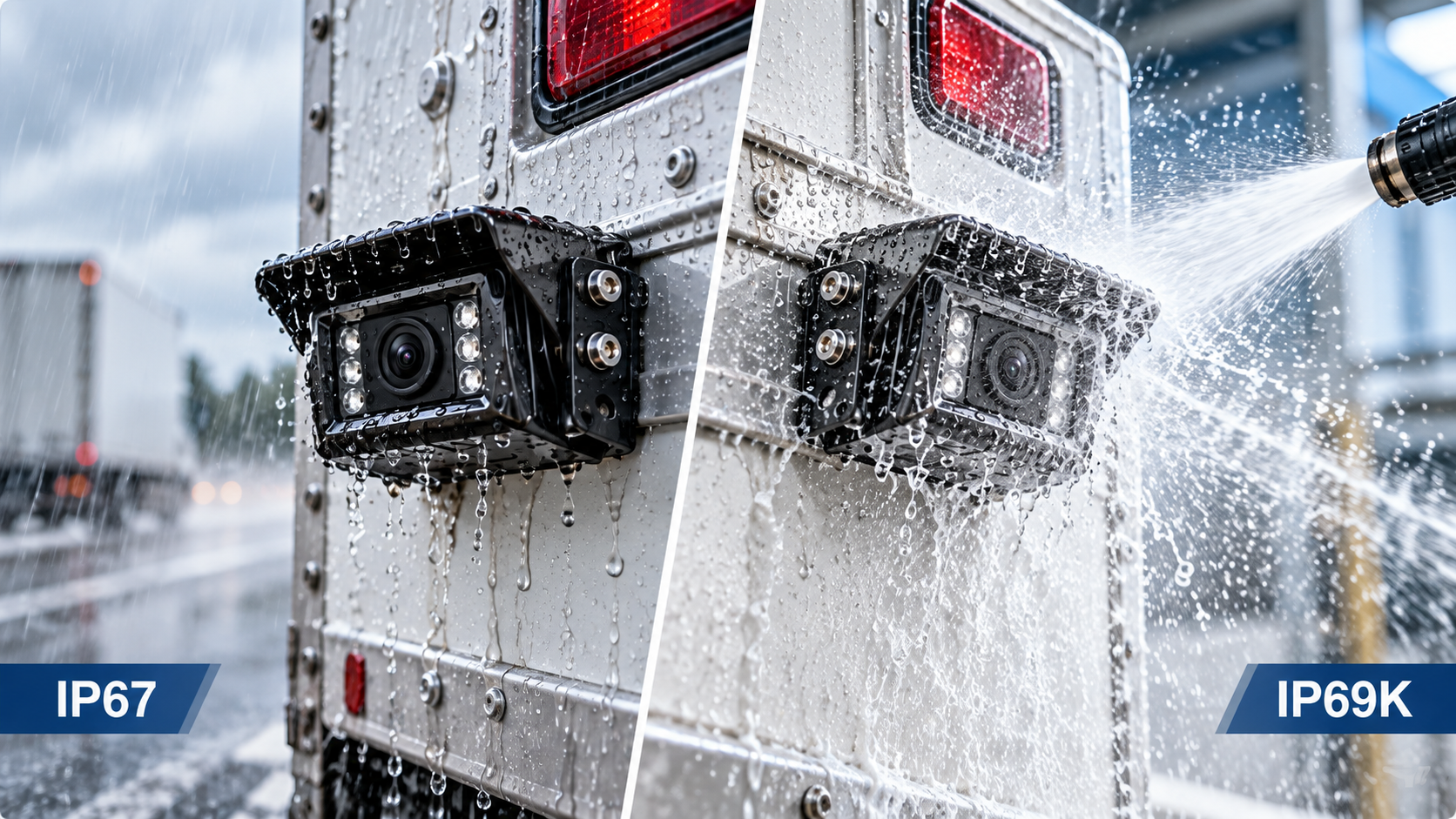
Quick Answer
Key Takeaways
- IP67 and IP69K describe different tests, not interchangeable guarantees.
- IP67 covers dust-tight protection and temporary immersion under specified conditions.
- IP69K addresses hot, high-pressure washdown; it does not automatically establish immersion protection.
- Choose by mounting exposure and cleaning procedure, rather than vehicle type alone.
- Evaluate the camera, connectors, cable joints and entry points as one complete installation.
IP67 vs IP69K Comparison
| Attribute | IP67 | IP69K |
|---|---|---|
| Dust protection | Dust-tight | Dust protection; confirm the stated standard |
| Temporary water immersion | Covered within test limits | Requires a separate immersion rating |
| High-pressure water jets | Not covered by IP67 alone | Tested for high-pressure jets |
| High-temperature washdown | Not covered by IP67 alone | Tested for hot-water jets |
| Typical passenger vehicle use | May suit sheltered positions and normal weather | Consider when the cleaning method requires it |
| Truck / bus / fleet use | May suit protected positions without pressure washing | Consider for exposed, regularly pressure-washed positions |
| Pressure washing | Only if separately approved by the manufacturer | Follow the manufacturer's cleaning limits |
| Installation considerations | Seal connections and cable entries | Seal connections and cable entries |
The comparison concerns enclosure ingress protection. Neither rating alone establishes resistance to road salt, cleaning chemicals, vibration, impacts or long-term seal ageing.
What Does IP67 Mean?
IP means ingress protection. In the IEC 60529 code, the first numeral describes protection against solid objects and dust; the second describes water protection. For IP67, 6 means dust-tight and 7 means protection against temporary immersion under the standard's defined conditions.
This controlled test does not permit indefinite immersion or unrestricted washing. Request the standard, tested assembly and installation instructions for the exact model. A published IP specification is not proof of independent certification.
Check rain and road-spray exposure at the camera, cable exit and joints. Confirm suitability with the supplier; the immersion numeral does not establish every kind of water protection.
What Does IP69K Mean?
IP69K is a commonly used product designation for dust protection and resistance to high-pressure, high-temperature water jets. The automotive water-test designation IPX9K is addressed by ISO 20653. Ask which standard and edition support the quoted product rating; do not silently treat IEC IP69 and automotive IP69K designations as identical documentation.
Ask whether hot cleaning jets will reach the camera. Truck depots, bus wash areas, construction sites and agricultural operations may use them. Exposed and sheltered cameras on the same vehicle can have different requirements.
The washdown test addresses a particular exposure. If immersion is also possible, request evidence for that separate requirement.
Is IP69K Better Than IP67?
IP69K is more relevant to hot pressure washing, but it is not universally better for every backup-camera installation. A protected passenger-car camera may already meet its intended use with IP67, provided the manufacturer supports the mounting and cleaning conditions.
For a frequently washed commercial vehicle, select protection that matches the wash process. Mud and exposed mounting may strengthen the case for a washdown-rated housing, but corrosion and chemical resistance still require separate review.
For the wider selection process, see How to Choose a Backup Camera for Trucks and Commercial Vehicles.
When Is IP67 Enough?
IP67 may be sufficient when the exact camera is approved for the intended exposure and the installation protects its connections. Possible applications include:
- Passenger vehicles exposed to ordinary rain and road spray.
- Protected mounting locations that keep direct cleaning jets away from the camera and cable exit.
- Installations cleaned using the manufacturer's permitted method.
- Vehicles that are not routinely pressure washed around the camera.
Check the camera instructions before deciding. A protected location still needs a sealed cable entry and a route that avoids collecting water around connections.
When Should You Choose IP69K?
Consider IP69K for exposed cameras that receive hot, high-pressure cleaning, including:
- Trucks and delivery vehicles.
- Buses, coaches and fleet vehicles.
- Construction vehicles and agricultural machinery.
Specify the wash procedure and confirm the camera's cleaning limits before ordering. Vehicle type alone does not determine the required rating.
Why Commercial Vehicles Often Need More Protection
Long operating hours and outdoor parking increase exposure to water and dirt. Mud collects around brackets; road salt and industrial cleaners require separate material-resistance checks.
For fleet rollouts, use an installation checklist so cable support and seals match the approved sample on every vehicle.
Use the Commercial Vehicle Camera Guide to plan multiple camera positions and displays.
Does IP69K Mean the Entire Camera System Is Waterproof?
No. The housing rating does not automatically cover cables, adapters, the monitor or vehicle body penetrations. Confirm which parts the rating covers.
Inspect:
- Camera connector and its rated mating conditions.
- Extension cable and exposed joints.
- Monitor-side connector and cab location.
- Cable entries, grommets and sealing method.
- Mounting holes and body penetrations.
- Installation angle, drainage and cleaning-jet direction.
Connector and Cable Sealing Matter Too
A connector rating may apply only when correctly mated. Use the specified seals, locking method and caps for unused ports; physical fit alone does not confirm sealing.
Keep joints out of pooled water and support cables to avoid pulling on seals. Follow the gland, grommet and strain-relief instructions. Tape around an unsuitable joint does not establish a rated connection.
Check an installed sample using the permitted cleaning procedure and inspect for ingress or image faults. This project acceptance check does not replace a standard test or establish certification.
See the Waterproof Vehicle Camera System Guide for the pre-order checklist.
Other Factors to Consider Besides IP Rating
- Video signal: Match AHD or CVBS to the receiving equipment; see the AHD vs CVBS Guide.
- Resolution: Confirm that the monitor accepts the camera's output mode.
- Viewing angle: Check the installed view at the intended height and orientation.
- Night visibility: Assess a sample under the actual available lighting.
- Operating temperature: Compare the quoted range with the vehicle environment; a hot-water test is not an operating-temperature specification.
- Connector type: Confirm sealing, pinout, power and the correct mating parts.
- Monitor compatibility: Verify the complete camera-to-monitor signal path.
- Mounting position: Review impact exposure, water drainage, cable routing and cleaning access.
Browse the camera category after defining these requirements. Select a model around the whole application, not the IP label alone.
Related Vehicle Cameras
These existing catalog models provide a comparison starting point. Their listed housing ratings do not establish the protection of a complete installation or independent certification; confirm the exact quoted configuration and supporting documentation.
Frequently asked questions
Is IP69K better than IP67 for a backup camera?
IP69K is more relevant when the camera is exposed to high-pressure, hot-water cleaning. IP67 may suit a protected installation without that cleaning exposure. If immersion matters, request separate immersion evidence rather than assuming IP69K includes it.
Is an IP67 camera waterproof?
IP67 describes dust-tight protection and temporary immersion under specified conditions. It does not mean unlimited underwater use or protection against every cleaning method. Check the camera instructions and seal the installation's connections separately.
Do trucks need an IP69K camera?
Not every truck camera position requires IP69K. Exposed cameras subject to routine hot pressure washing are stronger candidates than sheltered positions cleaned gently. Specify the actual environment and cleaning method before selecting a rating.
Can an IP67 backup camera survive rain?
An IP67 camera may be suitable for ordinary rain exposure when the manufacturer approves that use and installation. The rating does not prove every water-jet condition. Check the cable exit, connector and body entry as well as the housing.
Can I pressure wash an IP67 camera?
Do not assume that IP67 permits pressure washing. Temporary immersion and high-pressure cleaning are different exposures. Follow the manufacturer's cleaning instructions and keep pressure jets away unless suitability is specifically confirmed.
Does an IP69K camera guarantee a waterproof installation?
No. Exposed connectors, unsealed cable joints and poorly sealed mounting holes can still allow water ingress. Review the complete assembly and the conditions covered by each component's rating.
Standards and Technical References
The standards define test conditions; the application and installation recommendations above are engineering selection guidance, not a regulatory requirement or a report of SuperPower product tests.
- IEC 60529: Degrees of protection provided by enclosures.
- ISO 20653:2023: Road vehicle degrees of protection.
- E-Switch IP seal-rating reference for a manufacturer's explanation of the IP67 code.
- ESPEC technical information on IPX9K test equipment for separate washdown and immersion test categories.